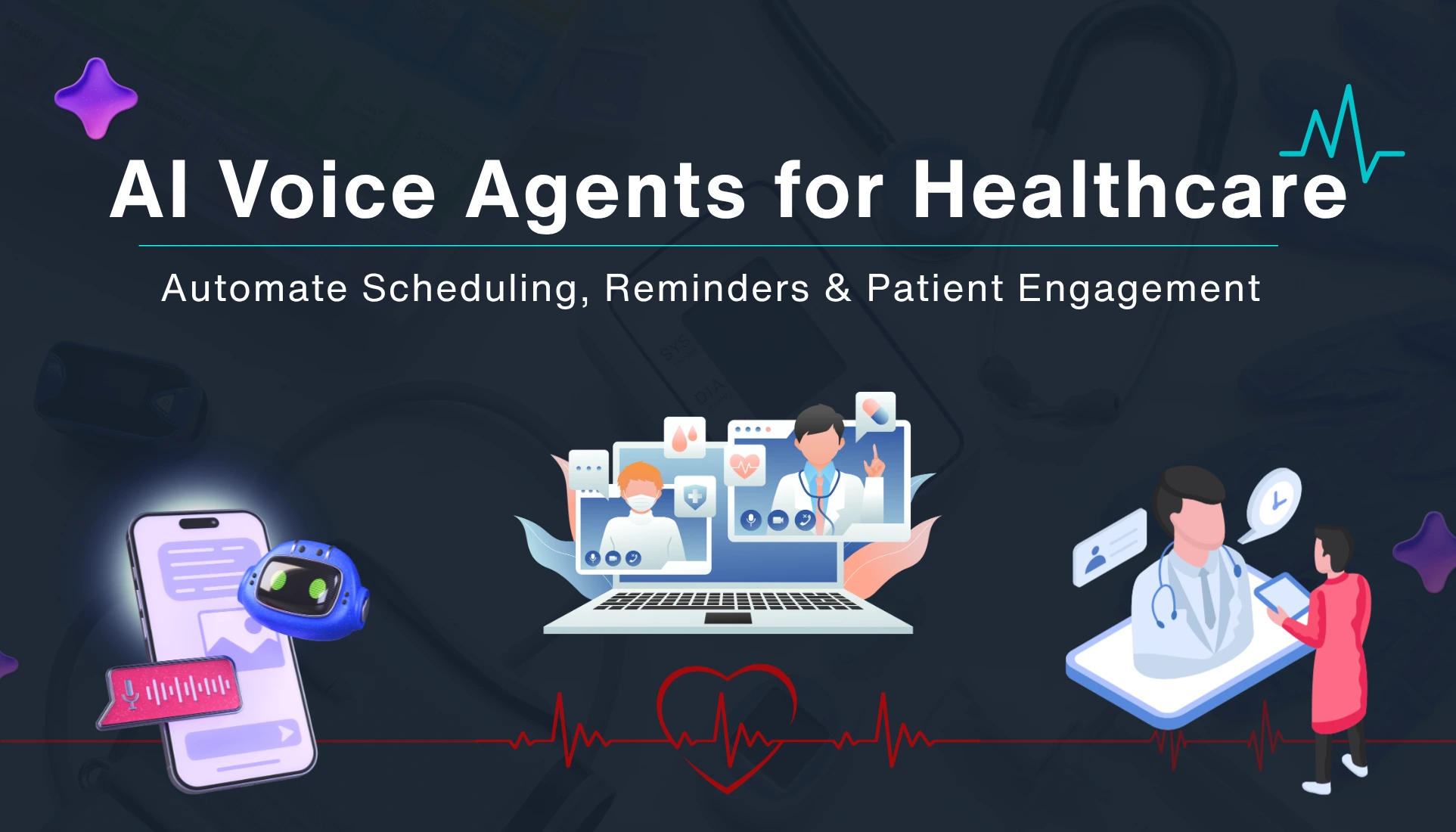
Discover how AI voice agents are transforming healthcare through automated appointment scheduling, patient reminders, HIPAA-compliant communication, and real-time engagement automation.
- 1AI voice agents automate appointment scheduling with real-time EHR integration.
- 2Healthcare voice AI reduces patient wait times and improves scheduling efficiency.
- 3Automated appointment reminders help lower costly no-show rates.
- 4AI voice systems support 24/7 patient communication without increasing staffing costs.
- 5Modern healthcare voice bots can personalize conversations using patient preferences and context.
- 6Voice AI platforms integrate with Epic, Cerner, and other healthcare systems.
- 7Patient engagement automation improves retention, follow-up compliance, and satisfaction.
- 8HIPAA-compliant voice AI uses encryption, audit logs, and secure API infrastructure.
- 9Healthcare AI voice agents can handle multilingual patient interactions at scale.
- 10Predictive AI workflows are helping healthcare providers proactively reduce missed appointments.
You ever dial the clinic first thing, heart racing because you're already late for work, and bam — stuck on that endless hold loop? Some cheesy elevator tune is droning on, eating your morning. Gets under your skin quickly. Healthcare voice AI automation jumps in exactly there, working the call like a sharp desk pro who's always on duty, no coffee breaks, keeping patients moving smoothly without all the wait-and-drag nonsense.
Why We're Talking AI Voice Agents for Healthcare
Push the flashy talk aside for a minute. Real deal here — these systems are live already, grabbing lines in the dead of night, digging into open slots, giving those gentle pokes about upcoming visits, holding light convos to make sure patients don't drift off. We see the numbers stacking up — the whole scene for these AI voice setups in healthcare kicked off around $468 million a couple of years back, and it's barreling toward $11.5 billion by 2034, with growth rates hovering near 38% each year. Makes total sense when you break it down. Front offices are buried under endless rings, no-shows chipping away 15–30% of every schedule, piling up that massive $150 billion drain on the U.S. healthcare setup year after year.
Truth is, life's too jammed for old routines. Squeezing doc time around jobs, school runs, life stuff — we've all felt that pinch. Phone menus that make you stab buttons blind? Staff stretched thin, notes half-done while lines pile up? Won't hold. These AI agents turn it around softly, peeling back the mess layer by layer, letting docs zero in on the real work: folks sitting there needing help. Picture a clinic head sighing deeply when they mention how call floods just… eased up. Overnight shift. Feels good, right? Like breathing room, finally.
Streamlining Appointment Scheduling
Phone buzzes at the desk. No frantic flip through screens or yelling across the room. AI voice agent picks up calm, steady. Patient lays it out — doc name, rough time, maybe a quick symptom note — and it flows right back, natural as chatting with a neighbor, scanning live spots in the EHR or whatever system you run.
Gets the nuance too. "Gotta be post-3 because kids' bus," they say? Slots it clean, no fuss. Switch times? Pulls the old one up, scans clashes, pitches options fast. Patient portal pings, doc's lineup refreshes — all seamless. Clinics talk about flu rushes that used to swamp them; now, it just hums along. Scales wild, one agent juggling floods without a blink.
Hooks into Epic, Cerner, the big names — no trapped info, everything synced. Feels almost magical, that schedule stretch.
Here's a quick look at how it stacks up against old-school methods:
| Old Way (Receptionist) | AI Voice Agent Way |
|---|---|
| Long hold times during peaks. | Instant answers, 24/7. |
| Manual calendar checks are prone to double-bookings. | Real-time integration, conflict-free. |
| Error-prone reschedules over phone tag. | Automated, accurate updates in seconds. |
| Limited after-hours coverage. | Always on, no overtime costs. |
| Staff burnout from repetitive tasks. | Team freed for high-touch care. |
Frees your team for actual care. Right?
Appointment Reminders That Actually Work
No-shows bleed cash — $150k gone for a lone practice yearly. AI patient appointment reminders fix that steadily. Not some cold ping. Rings early, week out: "Hey Sarah, just flagging — Dr. Lee check-up next Tuesday, 2 p.m.?" The day before follow up with text backup if needed.
Trials show drops up to 17% on misses. Sharp ones flag patterns — repeat skips, ride hassles — add layers like "Cab help? Code's yours."
- Tailored timingNight for late risers, dawn for go-getters.
- Multi-channelCall leads, SMS, or app trails — matches their groove.
- Follow-up if no reply"Tomorrow still good?"
- Risk-basedFrequent flakers get doubles, soft tone: "Things pile up, we get it."
Cuts loss. Keeps connection. Solid.
Anyway, does anybody really prefer forgetting and paying the price? Or worse, getting billed for it?
Power of Automation
Patient engagement automation goes miles beyond slots. Think after-care rings — "Knee holding up okay?" — pill checks, flu shot nudges in a voice that feels like an old friend.
Numbers don't lie: 63% jump ship on bad talk; 47% ghost from call chase. AI smooths it, real-feel. Chronics get log prompts — "A1C due, chat soon?" — trim returns sharp.
Here's the deal: Keeps rolling. Loyalty builds slowly, surely.
Engagement's proactive now. Reactive? Old news.
Voice Bots in Action
Voice bots for healthcare hit daily fires. Pre-check symptoms for priority bumps, and discharge polls straight to files.
Clinic test: 99% note match, admin shrink, HIPAA lock. Feedback webs scaled sans hires.
Live bit: "Post-op okay? Med top-up?" Flags urgent.
Pros stack up:
- 20+ languages for mixes.
- Worldwide feel, homely touch.
- Handles emotion — frustration, worry — smoothly.
You wonder why every hospital isn't all-in yet.
AI Call Automation Essentials
AI call automation healthcare essentials grab in/out bounds. Screens — "Fever high? Priority slot" — surveys with handoffs loaded.
Costs crash 90% some places. Complex to staff.
Rollout steps:
- EHR-match first.
- Accent-jargon train.
- Peak soft-start.
- Review-tweak.
It flies.
Navigating HIPAA Compliance
Data is core. HIPAA compliant voice AI needs to be bulletproof — encryption wraps PHI, BAAs seal deals, and SOC 2 checks the chain. Zero slop.
Ringg EHR-plugs safe. Retell, Hyro built tight.
| Feature | Why It Matters |
|---|---|
| End-to-end encryption. | Shields PHI in flight. |
| BAA on demand. | Locks legal accountability. |
| Full audit logs. | Traces every access. |
| Zero post-call retention. | Wipes clean after hang-up. |
| Role-based access. | Only those who need it see it. |
Vet deeply. Not all fit.
Challenges and How We Overcome Them
Rough spots, sure. Calendar knots — preferences, overlaps — snag weak ones. Talk quirks? NLP muscle. API gaps bridge.
Tips to nail it:
- One-spot pilot, rush times.
- AI-human mix.
- Transcript digs.
Fast curve. Think about it.
The Future — And Why Act Now
Looking toward 2026, healthcare is shifting toward predictive tools that identify potential no-shows in advance, alongside conversational experiences similar to those in retail settings. The market continues to expand rapidly, presenting strong incentives for adoption. Facilities that implement early have seen no-show reductions of up to 30 percent.
The necessary technology is readily available. Patients increasingly expect these conveniences, and healthcare teams require them to operate effectively.
Real-World Wins
Healthcare facilities consistently report shorter wait times and higher staff satisfaction following deployment. Administrative responsibilities have been reduced by half in many instances.
No-show math:
| Specialty | Avg No-Show | Cost/No-Show | Solo Loss/Year |
|---|---|---|---|
| Primary Care | 18–23% | $205 | $120k–$155k |
| Behavioral Health | 25–30% | $190 | $140k–$175k |
| Orthopedics | 12–18% | $385 | $130k–$190k |
Automated reminders provide measurable, transformative results. The time to implement it is now.