Explore how agentic AI voice agents power real-time conversational automation through autonomous reasoning, speech processing, enterprise integrations, and scalable voice AI infrastructure.
- 1Autonomous AI voice agents combine ASR, NLU, LLMs, and TTS for real-time conversations.
- 2Modern agentic voice systems adapt dynamically instead of following fixed scripts.
- 3Enterprise voice AI infrastructure enables scalable low-latency call automation.
- 4Real-time conversational AI relies on streaming inference and predictive response generation.
- 5AI voice agents integrate with CRMs, APIs, and backend systems to execute workflows autonomously.
- 6Self-supervised learning loops help AI agents improve conversations over time.
- 7Emotion-aware voice AI can detect tone, pauses, and sentiment shifts during calls.
- 8Businesses adopt voice AI for 24/7 support, operational efficiency, and customer insights.
- 9Secure API integrations and compliance frameworks are critical for enterprise deployments.
- 10Agentic AI voice systems are evolving toward multilingual and hyper-personalized interactions.
The Architecture of Agentic AI Voice Agents: How Autonomous Call Automation Actually Works
So, everyone's talking about voice AI these days. Some call it the "next shift" in automation. But when you peel back the buzzwords and AI jargon, what's really going on under the hood of these agentic AI voice agents? And more importantly — how are businesses wiring up these systems to handle real phone calls, with real people, in real time?
Let's break it down layer by layer — tracking how these setups handle decision-making, dialogue, and scaling across a flood of daily interactions.
Getting Real About Agentic Automations
Before diving deep into frameworks, let's clear one thing: these AI voice agents aren't just "chatbots with speech." They're autonomous systems designed to act — to make decisions, manage call flows, gather context, and even re-route conversation paths mid-sentence.
Picture digital staffers who grab the line right away, parse casual talk, pull up files, and reply smartly. No need to dictate every line.
It starts with what's called the autonomous voice agent framework, the underlying brain and backbone that keeps these conversations coherent and goal-driven.
Voice throws in hurdles text skips over. Hesitations, inflections, cut-ins, accents — they all play a role. The system has no room to dawdle; it fires back in split seconds.
Anatomy of an Agent: From Ears to Action
Picture someone phoning their insurer to tweak coverage details. Here's what happens behind the scenes, step by step:
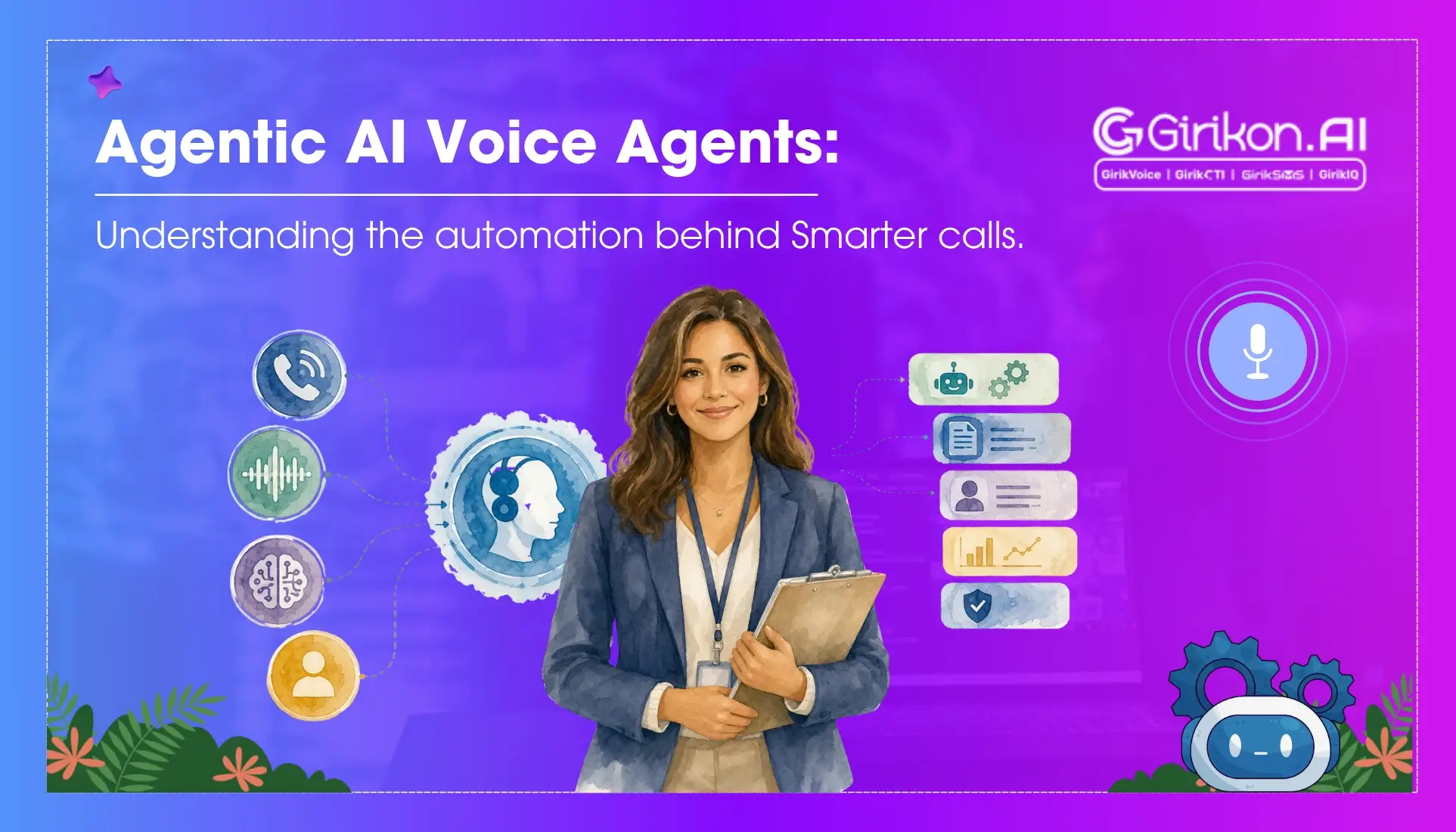
- Input Layer (Speech to Text) — The voice data is captured and converted into text in real time through an ASR (Automatic Speech Recognition) module. It's like the ears of the system.
- Understanding Intent — Next, natural language understanding (NLU) models parse the text to identify what the customer wants — updating policy, canceling coverage, requesting a quote, etc.
- Cognitive Layer (Decision Engine) — This is where the agentic reasoning happens. The system cross-references data, past interactions, and rules to decide what to do next.
- Response Generation (Text to Speech) — Finally, it crafts a response — contextual, polite, natural — and speaks it back instantly using neural TTS (text-to-speech) engines. That's the voice.
Each piece isn't working alone. They're wired together in a real-time data loop that never stops.
Inside the Agentic AI Voice Architecture
The agentic AI voice architecture isn't some giant, rigid block. It's a flexible, stacked setup that drives independence, flexibility, and instant voice handling. Let's break it down into four core pillars:
| Layer | Function | Example Components |
|---|---|---|
| Perception Layer | Captures and decodes speech; manages turn-taking. | ASR, Noise Filtering, Silence Detection |
| Cognition Layer | Interprets meaning, maintains context, and forms reasoning. | LLMs, NLU models, Vector memory storage |
| Decision Layer | Applies rules, goals, and constraints for next-best actions. | Policy Engines, Workflow Orchestrators |
| Execution Layer | Responds to the user, updates systems, and triggers APIs. | TTS Engines, CRM/ERP Integrations, API connectors |
Every voice AI vendor — from enterprise players to startups — is basically innovating on some mix of these four layers.
Agentic systems stand out because they pull from call results to tweak their approach — no hands-on tweaks required. A call veers off track or gets interrupted? No crash. It shifts gears, fixes course, stays smooth.
Comparing Early Voice Bots vs Modern Agentic Systems
| Feature | Early Voice Bots (2017 era) | Agentic AI Voice Agents (Now) |
|---|---|---|
| Response Type | Scripted | Adaptive, dynamic |
| Memory | Session-bound | Context-persistent |
| Tone Adaptation | Fixed | Emotion-aware |
| Data Access | Manual API triggers | Autonomous API orchestration |
| Use Case | IVR routing | Real-time task execution |
See the difference? It's not just speech quality that's changed — it's what the AI can decide, not just what it can say.
The Role of Enterprise Infrastructure
When we talk about scaling these agents, we're really talking about building a resilient enterprise voice AI infrastructure. Because you can't run hundreds of autonomous calls on ad-hoc servers.
Enterprise-grade setups involve multi-layered components:
- Load-balanced SIP or WebRTC gateways for call routing.
- Real-time voice pipelines optimized for low latency.
- Cloud orchestration connecting CRM, payment, and analytics services.
- Failover and recovery logic for dropped calls.
This setup makes AI agents part of the team — hooked into the tools humans use every day. Big financial firms, policy providers, carriers — they're running fleets of these during peak hours, juggling disputes, reservations, checks — all under a second apart.
Real-Time Conversational Systems: The Magic Layer
Now let's talk speed, because voice is unforgiving. In a real-time conversational voice AI system, latency is everything. A pause longer than half a second can ruin the experience. That's why these architectures rely on high-speed inference pipelines and streaming engines that continuously process speech chunks as you talk.
The architecture works kind of like a relay race:
- ASR starts decoding partial phrases.
- The intent model begins analyzing context halfway through.
- The response generator starts predicting replies before the user finishes speaking.
The result? Natural back-and-forth conversation with zero awkward silence. This blending of overlapping inference is what gives voice AI its human flow. It's not waiting — it's anticipating.
The Learning Loop
Here's something not every article mentions: autonomous call agents actually maintain something we call a self-supervised feedback loop.
That means they analyze call results — successes, retries, drop-offs — and feed those signals back to improve behavior. Spot a pattern where folks warm up to casual openers over stiff ones? The phrasing starts easing that way next time.
It's a gradual refinement, drawn from interaction signals and results. Over time, these micro-adjustments make the system sound more natural and effective — an iterative maturity process similar to a new employee learning through experience.
The Human Touch Behind Synthetic Voices
Funny thing: as AI voices get more lifelike, we begin to forget there's no person behind them. The best designs don't just mimic human tone — they understand the emotion in speech.
Modern real-time engines analyze:
- Pitch variation (to detect confusion or anger).
- Pause timing.
- Prosody and volume fluctuations.
A frustrated edge in the voice? The reply might ease up, weave in understanding, cut the jargon. That's real empathy modeling, and it's miles ahead of what early-generation bots could do. In fact, many enterprises now hire vocal coaches to "train" synthetic voice styles aligned with brand personality. Quietly fascinating, right?
Integrations: Where the Magic Meets Business Logic
All this brainpower would mean little if the agent couldn't act beyond conversation. That's where external integration pipelines come in.
Through secure APIs, these agents connect with CRMs, ticketing tools, databases, and verification systems — essentially gaining superpowers. So while talking to a customer, the AI might:
- Fetch account details in Salesforce.
- Log interaction summaries in a helpdesk tool.
- Trigger payment collection via gateway APIs.
The seamless orchestration of speech understanding and backend action defines modern autonomy. And because these systems can act across multiple APIs, they can manage full workflows — booking, verifying, updating — all in a single call. That's what we mean when we say real-time conversational voice AI today. It's not talk for talk's sake — it's talk that works.
What Do Enterprises Get Out of It?
Let's be blunt: automation isn't about novelty; it's about ROI. Enterprises adopt agentic voice technologies because of three massive benefits:
- 24/7 Availability — Customers don't wait for open hours. The agent answers instantly anytime.
- Cost Efficiency — AI handles repetitive interactions, so human agents focus on complex cases.
- Consistency — Every caller gets the same accuracy, tone, and compliance — no fatigue errors.
But there's another hidden value: data insights. Every voice call becomes analyzable data — sentiment trends, common questions, cross-sell triggers — all feeding back into product and marketing intelligence loops. That feedback goldmine drives smarter customer strategies over time.
Read More: The Complete Guide to Salesforce Call Recording for Modern Contact Centers
The Ethics and Compliance Question
Look, as powerful as agentic automation is, it raises fair questions about privacy, disclosure, and consent. Responsible deployments ensure:
- The voice agent identifies itself clearly as automated.
- Conversation data is encrypted and stored per regional law.
- Sensitive workflows (like payments) use secure, verified APIs.
Regulation isn't just a box-tick — it's how enterprises maintain trust at scale. After all, it's easy to get excited about autonomy; harder to design it ethically.
A Mini Framework: Building a Voice Agent for Business
Thinking about getting one up and running? Here's a straightforward 5-step sketch:
- Design Voice Personality — Pick tone, language, and brand-likeness.
- Create Conversation Flows — Draft logical flows, fallback routes, and emotion triggers.
- Integrate Enterprise Systems — Tie APIs with CRM, billing, and authentication.
- Test and Tune in Real Environments — Run controlled pilot calls, measure engagement.
- Iterate Based on Data — Use analytics dashboards to refine tone, pace, and logic.
Folks typically kick off with something basic, like scheduling reminders, then expand as the wins stack up.
Common Myths About AI Voice Agents
Let's bust a few before wrapping up.
- "They'll replace all human call agents." Not true. They complement, not replace. Humans still govern empathy and complex issue handling.
- "Setup is rigid and lengthy." Actually, with modular frameworks, microservices, and API-first platforms, deployment can go live in weeks.
- "Customers dislike talking to bots." Only if bots sound robotic. When designed properly, most users barely notice they're talking to AI — they just enjoy faster resolution.
Agentic Voice: Where It's Headed Next
Large language models keep advancing, so expect agent smarts to follow suit — think voices that tune into personal quirks or switch languages on the fly. Voice AI adoption in customer interaction automation has doubled in the past two years — and trends show no slowdown.
Final thought: Machines aren't just crunching words anymore — they're in the conversation. The agentic layer connects pure AI power to everyday business needs, turning talk into something truly sharp.
When folks wonder how call automation pulls it off, it boils down to architecture that tunes in, picks up patterns, and takes charge — like a tireless team member who's always on.