AI prospecting uses artificial intelligence to automate lead discovery, qualification and outreach preparation, helping sales teams build stronger pipelines and focus on closing deals.
- 1Automate lead research and qualification with AI to free up sales teams for closing deals.
- 2Define your Ideal Customer Profile (ICP) to enable AI to filter and identify relevant prospects.
- 3Utilize AI to build a dynamic prospect database by automatically gathering relevant company and contact details.
- 4Leverage AI for predictive lead scoring, prioritizing prospects based on conversion potential and intent signals.
- 5Shift from manual, reactive prospecting to AI-driven, intent-driven engagement for a faster, more scalable, and accurate pipeline.
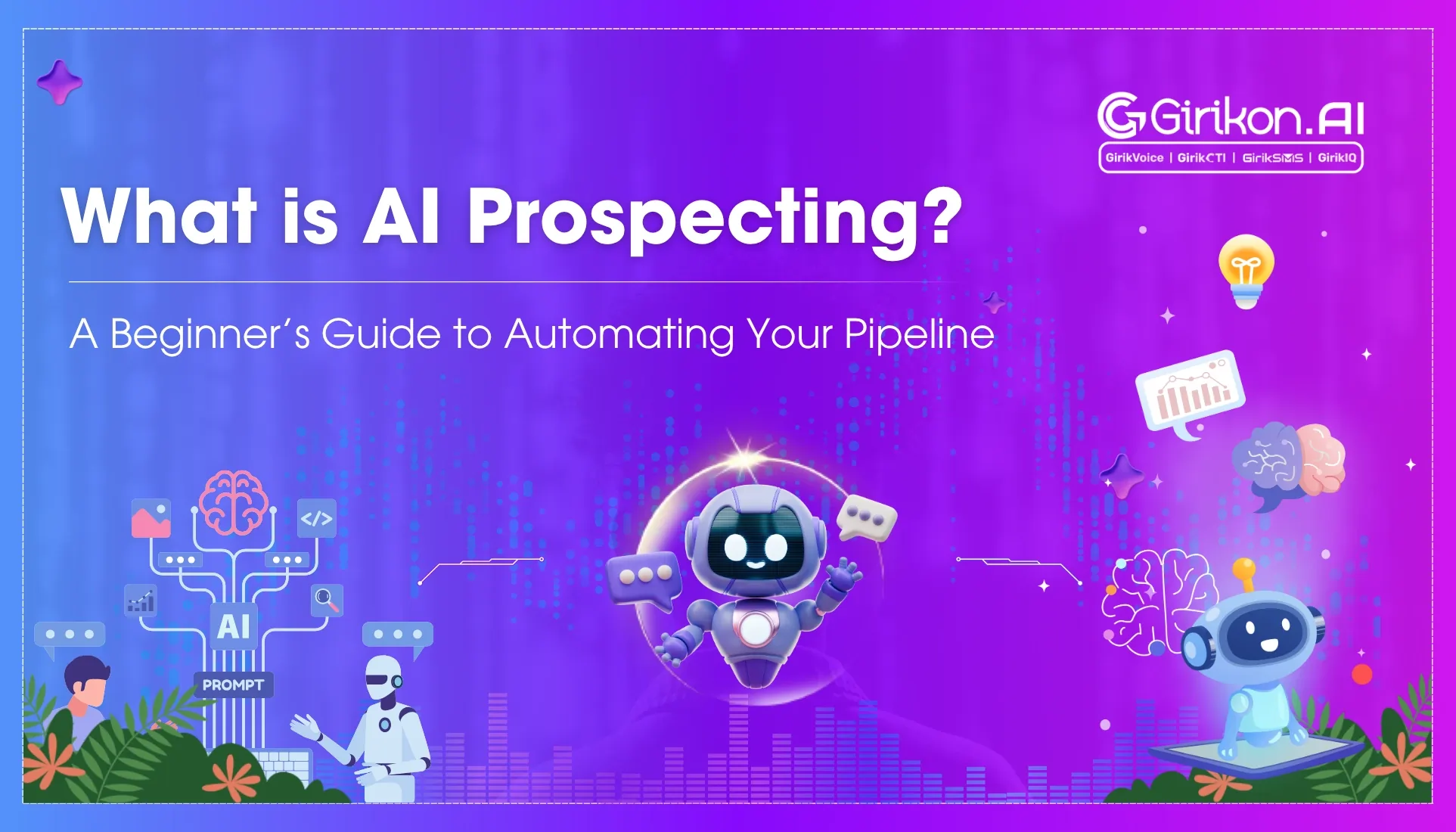
What is AI Prospecting? A Beginner’s Guide to Automating Your Pipeline
The amount of sales data available today is nowhere near to what it was a decade ago. However, the lead generation stage is still one of the most time-consuming stages of the selling process. For instance, a typical sales professional takes several hours conducting research, gathering information, lead qualifying, updating the CRM database, and other similar activities before making a call on a prospective client. The more extensive the prospect list, the more challenging it is for salespeople to cope with.
AI prospecting challenges the conventional methods. Contemporary AI sales prospecting systems allow companies to prospect for new clients and optimize pipelines by automating many processes that typically slow down the pipeline. Most of the efforts that used to be diluted by research can now be achieved automatically with the help of AI prospecting systems.
Therefore, your employees will have more time close deals than to prospect for them.
What is AI Prospecting?
Without AI in the equation, prospecting was a manual process for the most part. The task of the sales representatives was to prepare the lead list, analyze the companies, identify the decision makers, and choose which leads to follow up on.
This took most of their efforts to research prospects and find relevant information before they could start outreaching. AI prospecting changes the flow of work, handling the initial research until entire data and information is gathered, so that sales teams can begin with outreach immediately.
Modern AI Prospecting Tools Can:
- Search and find as per your ideal customer profile (ICP)
- Score and rank prospects based on conversion potential
- Analyze buying signals and engagement patterns
Prospecting Before AI vs. Prospecting With AI
For years, prospecting always took place in the same way. Salespeople scoured their databases, visited company sites, checked out LinkedIn pages, and manually entered data into their CRMs. It sometimes took several hours of investigation just to find qualified prospects.
The challenge wasn't a lack of leads. It was knowing which leads deserved attention.
AI shifts this dynamic. While people can utilize their judgment in making decisions on the quality of the lead, AI examines thousands of data points at one go, revealing hidden patterns. This technology allows salespersons to identify leads that are more likely to make a purchase.
| Traditional Prospecting | AI Prospecting |
|---|---|
| Manual lead research | Automated lead discovery |
| Static prospect lists | Dynamic account recommendations |
| Limited prospect insights | Real-time data enrichment |
| Broad targeting | Predictive lead scoring |
| Reactive outreach | Intent-driven engagement |
The result is a prospecting process that is faster, more scalable, and often more accurate. What once required multiple disconnected systems can now be managed through sales prospecting automation powered by AI.
How to Automate Your Sales Pipeline with AI Prospecting
AI sales prospecting is more than just finding leads - it's an automated process of finding, qualifying and engaging the prospective buyer before handing it over to a salesperson.
Step 1: Create Your ICP
Firstly, each sales cycle should start by knowing who your target audience is. You need to establish your ICP based on certain attributes that include the industry type, company size, revenue per year, and location.
Based on those characteristics, the use of AI will allow automatic lead filtering that do not fit.
Step 2: Build Your Prospect Database
With a defined ICP, potential matches can be automatically identified by AI prospecting tools. AI gathers relevant details about potential - helping teams initiate automated lead generation without human intervention.
Step 3: Prioritize Leads Using AI
Not every prospect is treated the same. AI uses sales history, activities, and intent to figure out which prospects have the greatest probability of converting and more.
The result of AI lead qualification means that salespeople don't have to manually go through long lists of prospects anymore.
Step 4: Initiate Intent-Based Outreach
By using AI, you can recognize signals from the leads you are trying to generate business with, like website traffic and interactions with any content.
Signals allow for the recognition of customer intent, allowing for targeted messages for AI lead generation.
Step 5: Build Connected AI SDR Workflows
Afterwards, the process requires you to integrate all the four stages into one single workflow. These AI SDR workflows reduce manual work and make it easier to proceed with qualified leads.
Sales prospecting automation creates a steady flow of opportunities where sales teams can focus on revenue generation.
Best AI Prospecting Tools: Choose by How Your Team Sells
Pick tools by sales motion, not feature lists. Below are a few useful classifications based on their use cases and suitable platforms.
1. Intent-Driven & Automation
Use case: Best for teams wanting to automate prospect discovery and spend more time engaging potential buyers.
Best platforms: Any that provides continuous intent monitoring, automation of enrichment, outreach workflows across channels, and prioritization of target accounts; ZoomInfo, 6sense, etc. are good options.
2. Relationship-Driven Prospect Scoring
Use case: Your GTM depends on referrals, warm intro, and social selling; outreach is effective when done with the context of individuals and personal connections.
Best platforms: Referral-based networking tools like LinkedIn Sales Navigator and prospect research platforms for finding contacts and building relationships.
3. CRM Ecosystems
Use case scenario: Best for businesses which manage their sales process through CRM and need AI-based insights in their business.
Tools to consider: There are many software tools leveraging AI capabilities like Salesforce Einstein, Hubspot CRM, and more.
4. Discovery & Outreach Together
Use case: For businesses that need simpler processes and fewer tools to manage customer outreach.
Tools to evaluate: Combined discovery-and-outreach platforms like Apollo.io, Mailshake that streamline list building and cadencing.
Conclusion
Building a sales pipeline used to require manual efforts to accomplish it by the end. Spreadsheets, research, and the hunt for more data.
AI sales prospecting simplifies this. Automation of processes like lead generation, lead qualification, lead prioritization etc., is going to assist you in forming healthy sales pipelines without any hassle of administration.
AI prospecting enables sales teams to spend less time researching and more time closing deals by automating lead discovery, qualification, prioritization, and engagement workflows.